



Artificial Intelligence (AI) is revolutionizing the DevOps landscape, drastically changing how teams design, build, and deploy software. By harnessing the power of machine learning and automation, AI helps streamline processes, improve code quality, and accelerate development cycles.
This article takes a closer look at the convergence of Artificial Intelligence and DevOps, highlighting its real-world applications, its impact on team performance, and the key areas that it’s reshaping.
Real-world applications of AI in DevOps
AI acts as a true productivity driver in the DevOps world, allowing development teams to focus on higher-value tasks. By analyzing massive amounts of data, AI delivers meaningful insights that support better decision-making throughout the development life cycle.
How AI is transforming team performance
Integrating AI into DevOps practices has significantly enhanced team performance. It automates repetitive tasks, freeing up time for innovation and complex problem-solving. Developers can now focus more on improving code quality rather than spending time on tedious debugging or testing tasks.
The DevOps areas most influenced by AI
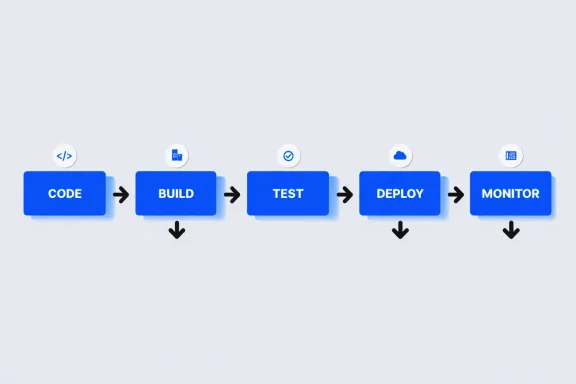
Continuous integration and deployment
AI has transformed the way that continuous integration and deployment (CI/CD) pipelines operate. It helps optimize workflows by automatically identifying bottlenecks and recommending improvements. AI tools can even predict potential issues before they occur, enabling smoother, more reliable continuous delivery.
Monitoring, alerting, and system resilience
In the realm of monitoring, AI excels at detecting anomalies and predicting potential failures. It analyzes millions of data points in real time, allowing for early issue detection and faster response times. This proactive approach significantly enhances system resilience and reduces downtime.
Security and vulnerability management
AI plays a critical role in securing DevOps applications. It can detect suspicious behaviour patterns, identify zero-day vulnerabilities, and even suggest patches. This constant vigilance greatly improves the security posture of both development and production environments.
Predictive DevOps: Using AI to stay one step ahead
Preventing incidents before they happen
Predictive DevOps, powered by AI, enables teams to foresee and prevent issues before they affect users. By analyzing historical trends and applying machine learning algorithms, AI can accurately predict potential failures, paving the way for effective preventive maintenance.
Key AI-powered tools to know
Several AI-based tools have become staples in the DevOps ecosystem:
- GitHub Copilot: An AI-powered assistant that suggests entire lines of code or complete functions to developers.
- Datadog: A monitoring platform that leverages AI to detect anomalies and anticipate performance issues.
- GitHub Advanced Security: A security tool that uses AI to analyze software dependencies for vulnerabilities.
Limitations, caution, and ethical concerns to keep in mind
Despite its many benefits, using AI in DevOps also raises some important ethical and practical considerations. Teams must be cautious not to over-rely on automated systems and should strike a balance between AI-driven efficiency and human judgment.
Issues related to data privacy, algorithmic bias, and accountability in the event of errors must be carefully addressed. DevOps teams should adopt a thoughtful, ethical approach to integrating AI, ensuring that its use aligns with company values and industry standards.
In conclusion, AI in DevOps paves the way for a new era of efficiency and innovation in software development. By adopting this technology wisely, teams can optimize their processes, enhance software quality, and accelerate delivery cycles. The future of DevOps is undoubtedly intertwined with artificial intelligence, promising exciting advancements in the years to come.